In 2025, Oulun Energia maintained stable financial performance and progressed rapidly with strategy execution despite uncertainties in the operating environment
In 2025, the Oulun Energia Group’s turnover was EUR 269.7 million (286.5) and operating profit EUR 43.6 million (50.8). The equity ratio strengthened to 52.3% (51.4%). The Group’s most significant cost items were electricity procurement costs, fuel procurement for power plants and employee costs. Results were challenged particularly by mild weather early in the year and lower electricity market prices. Gross investments grew substantially from the previous year, amounting to EUR 114.3 million (70.4).
In 2025, the Oulun Energia Group’s turnover was EUR 269.7 million (286.5) and operating profit EUR 43.6 million (50.8). The equity ratio strengthened to 52.3% (51.4%). The Group’s most significant cost items were electricity procurement costs, fuel procurement for power plants and employee costs. Results were challenged particularly by mild weather early in the year and lower electricity market prices. Gross investments grew substantially from the previous year, amounting to EUR 114.3 million (70.4).
“We are now systematically making strategy-driven investments that strengthen our long-term competitiveness and support the construction of a new-era energy system. These sizeable investments naturally affect our short-term profitability, but they are essential for building a sustainable foundation for growth,” says Arto Sutinen, CEO of Oulun Energia Group.
Electricity prices in 2025 were the lowest in Europe. Electricity price fluctuations continued, reflecting the unfinished nature of the electricity system and the market’s sensitivity to weather conditions and seasonal consumption variations. Oulun Energia successfully leveraged market volatility in the reserve markets, particularly through the flexible production of the biopower plant.
In 2025, Oulun Energia Oy produced 852 GWh (984) of electricity for the market using fully or partly owned power plants and long-term procurement agreements. Heat procurement totalled 2,175 GWh (2,316). We produced almost all district heat ourselves and purchased only two per cent (3) from industry.
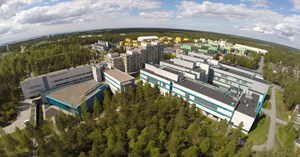
The electrification of district heat production progressed during the year. The 60 MW electric boiler at Toppila was commissioned in summer 2025, increasing electric boiler capacity to 100 MW. The boilers were utilised according to market conditions, improving cost-efficiency and reducing the need for combustion. In addition to electrification, surplus heat was recovered more efficiently when the Linnanmaa energy centre, integrated with Nokia’s smart campus, was commissioned in spring.
Despite subdued construction activity, Oulu’s district heating network continued to grow and develop. The number of connections at year-end was 11,230 (11,146). District heat delivery reliability remained excellent; customers were without heat for only 2.4 minutes (2.7) due to disturbances and planned shutdowns.
Major growth projects moved towards implementation
The acquisition of a 60% shareholding in Kenve was finalised, and integration commenced. At year-end, the official name was changed to Oulun Energia Kenve Oy, and the company was incorporated under the Group brand.
Circular economy company Syklo Oy’s growth investments in Hyvinkää progressed as planned. Construction of the plastics recycling plant was completed, and equipment installation began. An industrial-scale biocomposite plant is being built next to Finland’s largest plastics recycling facility. Both plants will start operations in summer 2026 and are expected to reach commercial production by the end of the same year.
Oulun Energia was involved in establishing Suomen Aurinkovoima Oy, which made a EUR 15 million investment decision to build three new solar parks. A new wind power company, Männikkötuulet Oy, was also founded during the second tertial in cooperation with four other energy companies. Männikkötuulet Oy acquired two onshore wind farms with a combined capacity of 60 MW.
Preparedness and responsibility embedded in strategy and daily operations
Geopolitical uncertainty, US trade policy and regulatory changes underscored the importance of predictability in the operating environment. The ongoing war in Ukraine has also imposed stricter requirements on preparedness and security for energy companies, and Oulun Energia invested in developing both physical infrastructure and cybersecurity.
The Group updated its climate targets during the year. A new strategic target is to reach net-zero emissions by 2040, in line with the Science Based Targets (SBT) initiative. The net-zero target replaces the previous goal of achieving carbon neutrality by 2030. The revised timeline clarifies the link between actions, strategy and investment planning, and improves comparability.
“We aim to mitigate climate change by reducing our own emissions. In line with the climate transition plan’s emission reduction targets, our total emissions decreased by 23% in 2025 and by 55% compared to 2022. Going forward, we will focus not only on reducing our own emissions but also on increasing the carbon handprint of our new products,” Sutinen explains.